
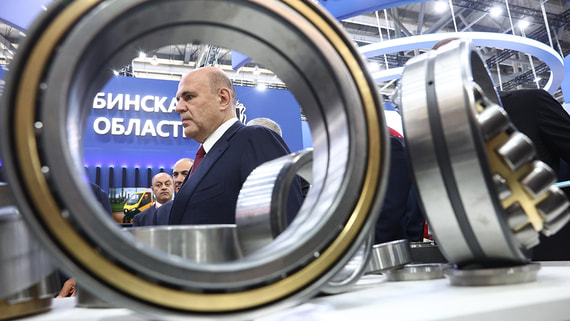
Ekaterinburg has once again become the epicenter of Russia’s industrial innovation as the country’s largest exhibition of industrial solutions opened its doors this week. Innoprom, the flagship industrial trade fair that has been held annually since 2010, brings together manufacturers, technology developers, government officials, and industry experts to showcase cutting-edge solutions and discuss the future of Russian manufacturing. This year’s event carries particular significance as the country continues to navigate the complex landscape of technological sovereignty and import substitution amid ongoing geopolitical challenges.
The exhibition halls are filled with demonstrations of advanced robotics systems, domestically produced microchips, and localized industrial equipment that just a few years ago would have been sourced from foreign suppliers. Thousands of participants from across Russia and partner countries have gathered to witness firsthand the progress being made in critical sectors including automation, electronics manufacturing, and heavy industry. The atmosphere reflects both pride in recent achievements and a clear-eyed assessment of the challenges that remain.
Robotics Revolution Takes Center Stage
One of the most prominent themes at this year’s Innoprom is the rapid advancement of Russian robotics capabilities. Exhibitors are showcasing a new generation of industrial robots designed for manufacturing, logistics, and specialized applications. The push toward automation has accelerated significantly in recent years, driven by labor shortages, the need for increased productivity, and the strategic imperative to reduce dependence on foreign technology. Russian robotics companies have made substantial strides in developing manipulators, autonomous guided vehicles, and collaborative robots that can work alongside human operators safely and efficiently.
Industry analysts note that Russia’s robotics sector has grown considerably since 2022, with domestic manufacturers stepping in to fill gaps left by departing Western suppliers. While the country still lags behind global leaders like Japan, Germany, and China in terms of robot density per worker, the trajectory is clearly upward. Government programs supporting automation in manufacturing have provided crucial funding and incentives, while universities and technical institutes have expanded their robotics curricula to build the necessary talent pipeline.
The Critical Challenge of Microchip Production
Perhaps no topic generates more intense discussion at Innoprom than the state of Russia’s microelectronics industry. The global semiconductor supply chain has become a critical battleground in international technology competition, and Russia has made chip localization a top national priority. At the exhibition, several Russian companies are presenting their latest achievements in chip design and manufacturing, including processors intended for industrial control systems, telecommunications equipment, and consumer electronics.
The path to semiconductor self-sufficiency remains long and technically demanding. Modern chip manufacturing requires extraordinarily sophisticated equipment, ultra-pure materials, and decades of accumulated know-how. Russian facilities currently produce chips at larger process nodes than the cutting-edge fabs in Taiwan, South Korea, and the United States. However, officials and industry representatives at Innoprom emphasize that not all applications require the most advanced chips, and there is substantial value in producing reliable, domestically controlled semiconductors for industrial and infrastructure applications where security and supply chain stability matter more than raw performance.
Localization Efforts Across Industrial Sectors
Beyond robotics and microelectronics, Innoprom 2024 showcases localization achievements across a broad spectrum of industrial activity. Machine tool manufacturers are displaying domestically produced CNC equipment, while companies in the automotive, aerospace, and energy sectors present components and systems that have been redesigned for local production. The exhibition reflects a fundamental shift in Russian industrial strategy, moving from a model heavily dependent on imported technology to one focused on building comprehensive domestic capabilities.
This transformation has not been without difficulties. Localizing complex industrial systems requires not just manufacturing capacity but also deep engineering expertise, quality raw materials, and robust supply chains for components and spare parts. Some exhibitors candidly acknowledge that certain locally produced alternatives do not yet match the performance or reliability of their foreign predecessors, though they express confidence that continued investment and iteration will close these gaps over time. International partners, particularly from China and other friendly nations, maintain a visible presence at the fair, underscoring that localization does not mean complete isolation from global industrial networks.
Looking Ahead: Aspirations and Realities
As Innoprom continues through the week, panel discussions and roundtables are delving into the strategic questions facing Russian industry. Participants are debating how to accelerate technology transfer, scale up successful pilot projects, and train the skilled workforce needed to operate and maintain increasingly sophisticated systems. Government officials have outlined ambitious targets for domestic production across key sectors, while industry leaders offer more measured assessments of what can realistically be achieved in the near term.
The exhibition serves as both a showcase and a reality check, demonstrating genuine progress while highlighting the substantial work that remains. For Russia’s industrial sector, Innoprom 2024 represents not just a trade fair but a strategic gathering where the roadmap for technological development is being actively shaped and debated by those who will be responsible for executing it.
Expert Opinion: The emphasis on localization at Innoprom reflects a broader global trend toward technological sovereignty, but Russia’s path will require sustained investment over many years to achieve meaningful independence in critical sectors. The robotics sector shows the most promising near-term potential, while semiconductor manufacturing will remain a generational challenge requiring both domestic innovation and strategic international partnerships to overcome current limitations.